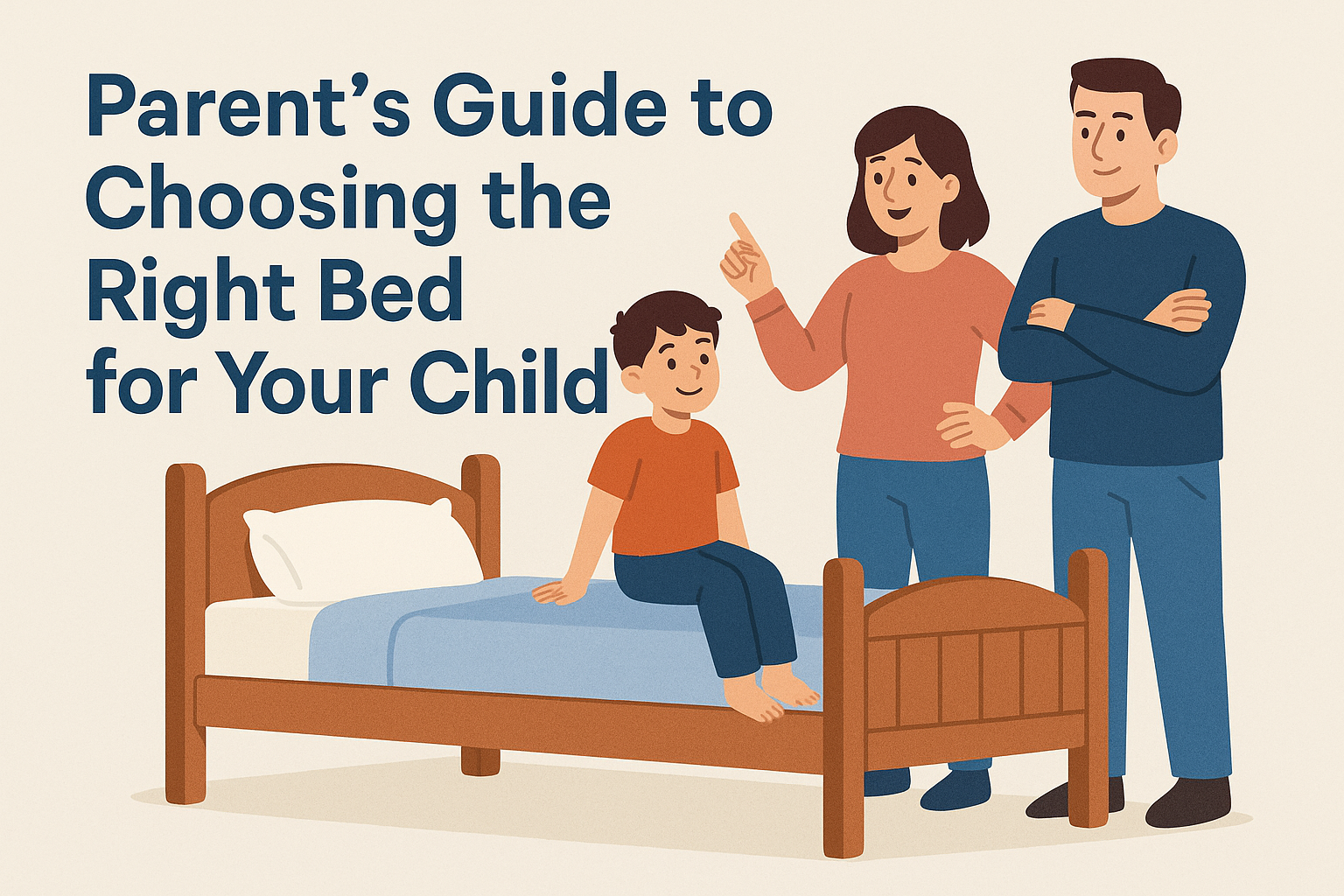
Parent’s Guide to Choosing the Right Bed for Your Child
When it comes to selecting a bed that your child is going to use as he or she grows, it is more than a mere furniture choice. It is about comfort, protection, character and functionality. The transition between a child leaving his or her crib and receiving their first real bed can be as thrilling as it can be stressful both to the child and to you.
Do you get a toddler bed or jump to a single kids bed? Is it based on a theme? Wooden? Convertible? This article will hopefully ease that confusion, spelling out what you need to know, without making it a furniture jargon evaporation.
When Is the Right Time to Move to a Big Kid Bed?
The majority of children will leave a crib within the 18 months to 3.5 years. The time period is based on the level of development of your child, movement and comfort. In the event that they are crawling out of the crib habitually or appear squeezed up in the crib, this is a concrete indication that they are prepared to go.
Emotional preparedness is equally vital, however. There are children who are in need of an adjusting period and others who are eager to sleep like adults. That can be made easier and more engaging by involving them in the process of preparing them, making decisions about the bed frame, choosing a favourite colour.
Understanding the Bed Options
You must understand the types of beds in the market and the type that meets your needs, before you start going through catalogues and online lists.
Toddler Beds
Toddler beds fit children of 1.5 to 4 years. They are lower to the ground and a child can easily climb in and out without assistance and they typically have side rails designed to keep them in the crib at all times. It is also economical as many toddler beds share the same mattress as a typical crib, so that is a plus.
They are perfect when your kid is still very young or when you need to make a transition from crib to regular bed to be slower.
Single Kids Bed
The most common after a toddler bed is a single kids bed that is usually 72 to 78 inches long. This is also a regular single size which fits well in children 3 and over. A lot of parents bypass toddler beds altogether and start using a single bed, particularly when the trend is to seek long term solutions.
One bed may well be into the teen years, particularly when selected with a neutral design that can be adapted as your child grows in tastes.
Convertible Beds
Convertible beds are very good value. They are cots/toddler beds which can be turned into full sized single beds and even desks or sofas as the child grows. Although they may be a bit expensive to buy, they may save one for future purchases.
Convertible beds are a wise option if you are looking for longevity in the practical usage of the bed.
Bunk Beds and Loft Beds
Bunk beds or loft beds may make good choices with more than one child in a room, or where the space is limited in the vertical zone. But they are usually advisable to children of 6 years and onwards because of safety issues. In fact, some designs have study desks or built-in storage underneath the bed which is very useful in maximizing the space in a small room.
Themed Beds
Themed beds are big with younger children, with beds shaped to look like cars and canopies in fairytale style. When in need of a kids bed for girls or boys that might add fantasy and fun to the bedtime ritual, themed beds can help. These beds however tend to lose their appeal much quicker, and must be replaced after your child grows tired of the theme.
Key Features to Look Out For
These are some of the major features to consider when choosing the best bed:
1. Safety First
Safety is not a matter of negotiation and age or type of bed. Seek out beds where edges are rounded, young children have guardrail type of features, and finish is without toxic chemicals. Ensure that the bed meets BIS or worldwide safety specifications, particularly toddler beds and convertible models.
2. Build Quality and Materials
Engineered wood is not as durable as solid wood like pine or rubberwood. Nevertheless, designed solutions may weight less and be cheaper. Metal beds are sturdy yet lacking a bit of the warmth wooden beds may provide and do not work well with all room decor.
Be sure the joints are of good quality; ensure there is slat support at the bottom to hold the mattress in place, and that the item will be able to sustain overall weight, particularly in the event you want to sit alongside your child when his or her bedtime reading comes up.
3. Design and Aesthetics
The appearance of a bed is of greater importance than you imagine. It does not only require to suit the decor of your room-it must also be attractive to your child. An example would be that neutral colours/ classic designs have a longer lifespan on the eyes whereas character-related beds might need an overhaul after the interest in the character dies.
It is usually prudent to opt for a gender-neutral design unless your child focuses on made and sustained interest. This way, you do not stereotype the bed as a kids bed for boys and a kids bed for girls- the bed becomes their bed.
4. Storage and Space Solutions
Many contemporary children's beds have drawers built in, or shelves built into the headboard. These are functional additions without requiring additional furniture. In an apartment or compact home with children, the bedroom cabinets can assist in clearing up toys, books, or seasonal clothing.
5. Mattress Fit and Comfort
Have the mattress be inserted firmly into the frame-any spaces are hazardous more so to toddlers. A firmly-soft mattress gives the proper balance of firmness and softness to growing children. Seek out hypoallergenic, waterproof, or washable covers as they are easier to care about.
Budgeting Smartly
Kids beds usually come in a whole lot of variety and price range in India, with toddler beds at 6000 to 10000 rupee, single kids beds at 10000 to 25000 rupee, and convertible beds at 12000 to 30000 rupee. Themed beds and storage beds are usually priced between 8000 and 28000. Budget choices can be appealing but it can be smarter and more economical in the long-term to spend a little more on a bed that will grow with your child.
Involving Your Child in the Process
One thing that will help is to allow your child to be involved in the process of selecting his bed. It makes the transition easy and it makes them feel responsible. Ask them which are the colours they prefer, what gives them a feeling of security, and cosiness, or would they prefer having a bed they can climb up by themselves.
Even minute choices- such as bedsheet pattern or bed head shape- can add more personal feel to the bed. Simply keep in mind to make their decisions workable. Not all ideas will be economical or good in the big picture but having them in the process creates excitement and ownership.
Preparing for the Switch
These are some of the last considerations before the move:
-
Take the room measurement: Do not only take into consideration the bed but also the walking area, storage areas, and play areas.
-
Sibling bunk: You may have a new child very soon so think of bunk beds or convertible beds which can be used again.
-
Test delivery and assembly: Always consider the delivery and assembly services when purchasing, especially so when you are purchasing online.
-
Test stability: When purchasing in-store (online), do not be afraid to perform a slight sit or press to find out how firm the bed is.
-
Think in the future: 1 year from now will your child fit the bed? What about in five years?
Final Thoughts
Choosing an appropriate bed for your growing kid is a big step not only in the decor of a room, but also in the support of comfort, growth, and imagination of a child. It could be themed toddler bed or classic single kids bed, the mission is the same: to make space safe, personal, and containing all possibilities.
Their bed sees everything, and it is their quiet witness of all those everyday things, such as bedtime stories and early morning cuddles. Make sure it is one that will last--with care, with charm and with a measure of elbow-room.